

Asset & debt tracking
What they owned and owed, with the totals kept for you
Before you can apply for probate or pay anyone, you need a list of everything the person owned and owed. EstateCopilot asks about each kind of asset and debt in turn, so you aren't starting from a blank page, and tells you whether probate is likely to be needed.

What it does for you
- Every kind of asset
- Bank and building society accounts, ISAs, property, vehicles, investments, pensions, money owed to them, and personal possessions.
- Jointly owned property
- Mark an asset as joint and enter their share. EstateCopilot works out the value for inheritance tax and the value for probate, which aren't always the same.
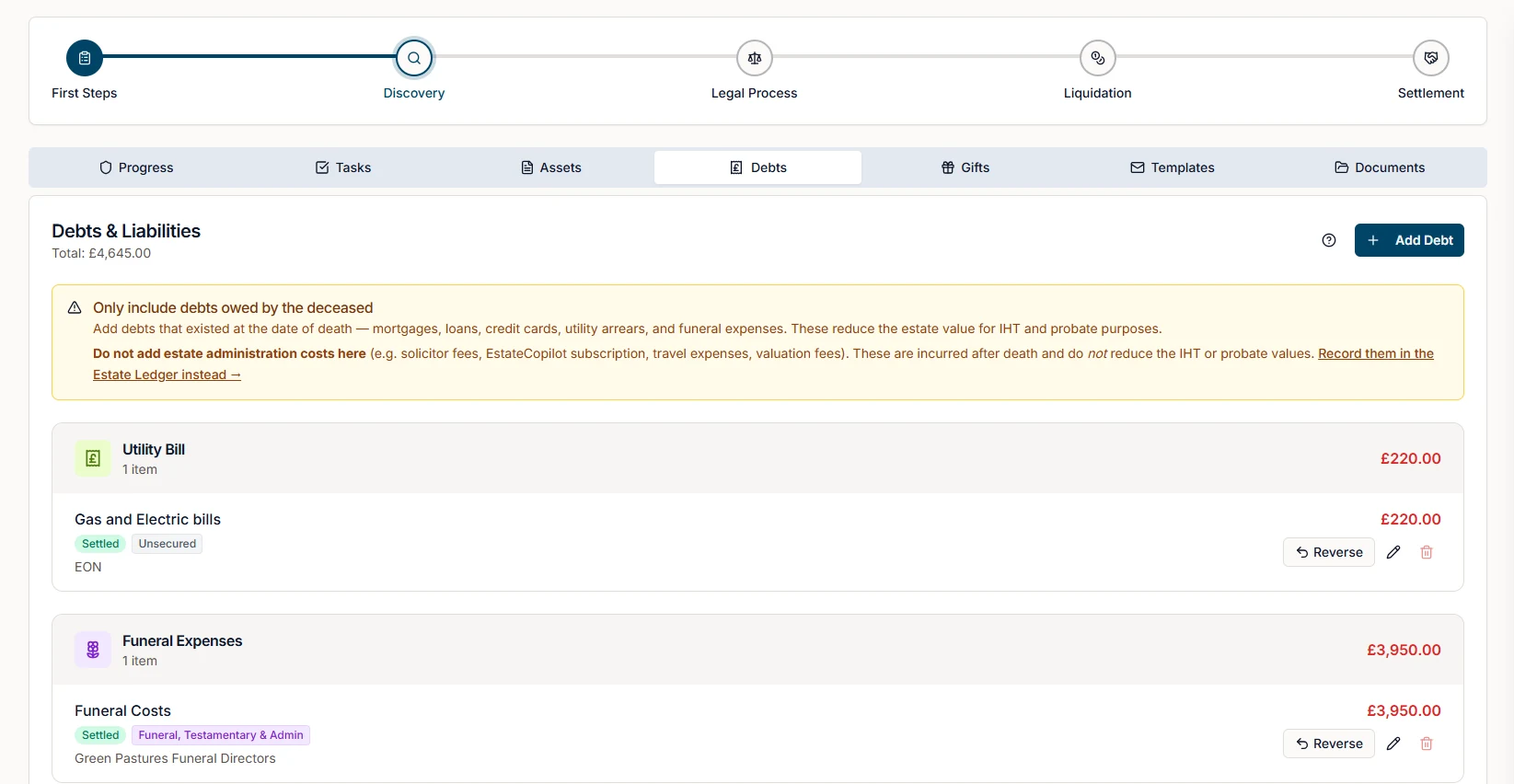
- Debts, and which are paid
- Record the mortgage, credit cards, bills and funeral costs, and settle each one when it's paid so the accounts stay right.
- Bank limits checked
- Each bank will release money up to its own limit without a grant. EstateCopilot shows which accounts are over that limit and need probate or confirmation.
- Sold, transferred or still to do
- For each asset, record whether it's been sold, passed to a beneficiary or is still to deal with.
How it works
Step 1: Add each asset and debt
Add them as you find them. Use an estimate at first and update it when the valuation arrives.
Step 2: Check the totals
See the estate's gross and net value, and whether probate or confirmation is likely to be needed.
Step 3: Record what happens to each one
As you sell assets and pay debts, record it. Sales and debt payments go into the ledger for you.
Questions
Try it on your estate, free
Set up the estate and see your task list before you pay anything. It works for England, Wales, Scotland and Northern Ireland.
Related features
- Complete ledger & financial accounts
Money in and out, and the estate accounts at the end
- Form builder
The PA1P, PA1A or C1 filled in from what you’ve entered
- Smart task management
Every task for this estate, in the order to do them
We use cookies
We use cookies to run the site and, if you agree, to measure it and our adverts. We use essential cookies to run the site and keep you signed in. If you agree, we also use analytics cookies to see how the site is used, and marketing cookies to see which of our adverts work. Privacy PolicyLearn more in our Privacy Policy